
There is no climate justice without recognizing that everything we care about is deeply interconnected, especially in the cities where we live.
Estimated reading time: 10 minutes
Don’t get us wrong, we LOVE cities. We will be a dirty city slicker forever, thanks.
Though, there’s a lot to consider when thinking about vibrant cities. As we learned in our Climate Migration action pack, 40% of city dwellers are projected to live in slums by 2030. Though, projections aren't reality. WE shape reality and we shape our cities.
Here’s what we’ll cover step-by-step:
When we talk about climate change, we're not just talking about carbon molecules floating around and choking in greenhouse gases. We're talking about struggling towards a planet where we can all have access to a healthy, resilient, and joyful future. There is no climate justice without recognizing that everything we care about is deeply interconnected, especially in the cities where we live.


🎯 Action step 1 of 4: READ — Let's start by looking at a few articles together.
Have you seen your urban environment impact your behavior? In evolutionary biology, we learn that by simply observing an ecosystem or biome, we can predict what kinds of plants and animals live there, how they look, and how they behave. The urban environment is no different, except it’s the only ecosystem we humans have intentionally designed for ourselves. It shapes us in ways we often don’t notice.
Many times, traveling into a new environment feeds the examples of what we can bring back.
Think about the following:
Now that you've pondered your agency in shaping your own environment, what will you do with this power? What are you dreaming of? Imagination is key to unlocking the possibilities we reach for.
🏁 Checkpoint: This is the end of action step 1 of 4: READ.
🎯 Action step 2 of 4: LISTEN — we'll watch a short video or listen to a podcast to further expand on our topic.
The good news is that there are ways for us to create a vibrant city that is rooted in resilience. The following three resources show you how!
🚌 Read how Philly launched its first School Street pilot!
A school street is basically what it sounds like: closing a street near a school to car traffic so it can be safe for walking, rolling, and vibing. Some obvious pros of school streets include: socializing on your walk, enjoying the outdoors without breathing in fumes, and not having to worry about getting hit by a car.
Paris has 200+ of these, but you don’t see much school streets in the U.S. and car-centric cities around the world.
Pilots are awesome, because they can be easy(ish) to organize. Once a pilot is in place, people are far more attuned to the real-life benefits.
🕰️ Learn how Barcelona is reforming time.
No, not a typo and not time travel, either. Barcelona "has been adopting revolutionary time-use policies since 2003. The idea is that time is, first and foremost, a right for all citizens and that everyone should be able to reconcile work and personal life." If you're asking, “How the heck does this relate to climate change or vibrant cities,” read the article and think about it for a few minutes. What would your life look like in a world without rush? How different would your city be if everyone had an abundance of time?
🌞 Browse the solarpunk postcard to-do list.
If you were inspired by the pilot idea above, Jacob Coffin has a whole list of ideas for you! Go through the list and see what you might actually be able to implement in real life. Watch this video about how to build a solarpunk city to help you visualize.
These examples are a huge wake up call that building a just future isn’t about waiting for one big solution, but begins with reclaiming our streets and our imagination.
🏁 Checkpoint: This is the end of action step 2 of 4: LISTEN.
🎯 Action step 3 of 4: ACT — Now it's time to do something. Let's go!
What better day than TODAY to make your city more vibrant?
The great thing about this topic is that these actions can range from smiling at strangers to (possibly, certainly, maybe even) running for mayor! Guided by the 4 R's for social transformation framework, there are so many things we can do to create Vibrant Cities. Act by resisting, reforming, re-imagining, or recreating.
1. RESIST car culture by taking transit, biking, or walking for one of your common habits!
For example, if you usually drive to a grocery store, take another mode of transit and see what you learn.
2. REFORM by writing a letter to your local representative to create vibrant cities.
In our previous action pack, we talked about the implications of the FIFA World Cup. Whether or not your city is hosting a match, here's a script you can use:
Dear [THEIR NAME], I'm [YOUR NAME] and I [personalization]. I'm writing to you to advocate for a pedestrianized streets pilot in advance of next year's world cup [or some other milestone]. As a [parent/child/worker/etc] in your district, [name of street] makes me feel unsafe, and launching a pedestrianized pilot would go a long way towards a vibrant city.
3. REFORM by attending an upcoming city planning meeting!
If you live in a smaller town, these might be harder to find, but committees are always meeting to discuss stuff in your neighborhood or area. Join one, listen in, and get involved! Maybe you'll run for mayor someday.
4. RE-IMAGINE the block where you live.
Go for a walk this week. Look at a specific building, or maybe a planter box, or maybe the pavement itself. How can it be different? What is the smallest possible change YOU can make towards a vibrant city (like... maybe drawing a chalk hopscotch)?
5. RE-CREATE by doing one thing this week towards a more vibrant and connected city.
Eric Klinenberg's research shows that whether you live or die in a climate emergency can be greatly attributed to how good your social infrastructure is. We need more shared spaces, and sometimes, these take years to build. However, YOU can do so much to increase social connection, and your mission this week is to choose something. It can be as simple as a window sign, laying out some chairs to form a stoop outside, or talking to a stranger in line at the grocery store!
Anything that combats loneliness counts as climate resilience. If there's ONE action you take away from this action pack, it's for you to go outside, touch grass, and most importantly, make human contact. Smile at someone even if it's awkward. We believe in you!
🏁 Checkpoint: This is the end of action step 3 of 4: ACT.
Before we go any further, it's time for you to pledge your commitment. It takes less than 30 seconds to pledge and we can bother you about it in a friendly way, so we can hold each other accountable. Pledge here!
🎯 Action step 4 of 4: REFLECT — what can you commit to? What fresh perspectives can we look at?
We’ve been thinking a lot about San Francisco, the city where Soapbox was born before our team moved to Seattle. The question ping-ponging around our heads was... how cool would it be if the mountains had train tracks instead of traffic-full roads for cars?
Imagine our devastation when we found out that THIS USED TO BE A THING.
There used to be The Crookedest Railroad in the World on the other side of the Golden Gate Bridge! They even had these super cool cars called gravity cars! Sad news is there was a fire, but even after rebuilding the tracks anyway, the railroad died a silent death and got replaced by asphalt for automobiles.
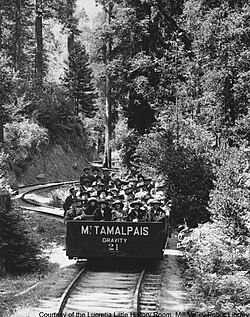
It’s so bizarre to see that our dreams for the future have already been created in the past.
That's why we want you to do two things as we wrap up this action pack:
The great thing about this activity is you can do this anywhere. You can even do this in a conversation with a stranger. Bonus points if you make a brand-new map of your own with visions of the future rooted in the past!
Our wish is for you you do something tangible to make your city better: more joyful, more healthy, or more resilient. Humans have changed their landscapes for as long as we've been alive, and it's time for us to do it with the right outcomes in mind.
🏁 Checkpoint: This is the end of action step 4 of 4: REFLECT.
Check out our membership community for more resources like free weekly events with social justice experts, sustainable product discounts, pre-written email templates, a social impact job board, and in-person hangouts with new friends. Thanks for taking action with Soapbox Project!